Creative Direction Is a Taste Skill, Not a Software Stack: A 20-Year View From a Lagos Creative Director
From 2016 to 2036, the tools of creative work have changed beyond recognition — but creative direction, taste, and creative leadership still decide who wins.
Paul Jesutofunmi Adegoke — Founder & Creative Director, 1204Studios
If you have spent any time inside a creative agency in the last decade, you have probably heard some version of this argument: the tools have changed everything. Photoshop opened the door. Figma rebuilt the room. AI is now redecorating it every six weeks. Every quarter, a new piece of software promises to make creative work faster, cheaper, and "democratized." And every quarter, the same uncomfortable truth re-emerges: the work that actually moves brands forward is still being made by a small group of people with taste.
I run 1204Studios, a creative agency in Ikoyi, Lagos. We do brand strategy, identity systems, web design and development, motion, pitch decks, and creative direction for clients across Nigeria and the diaspora. I have watched the craft of creative direction shift through three very different eras, and I want to lay them out side by side — what creative work looked like 10 years ago, what it looks like in 2026, and what I expect from the next 10 years. Then I want to make a case I am very confident about: creative direction is a taste skill, not a software stack. And it is becoming more of one, not less.
2016: Creative Work as Software Mastery
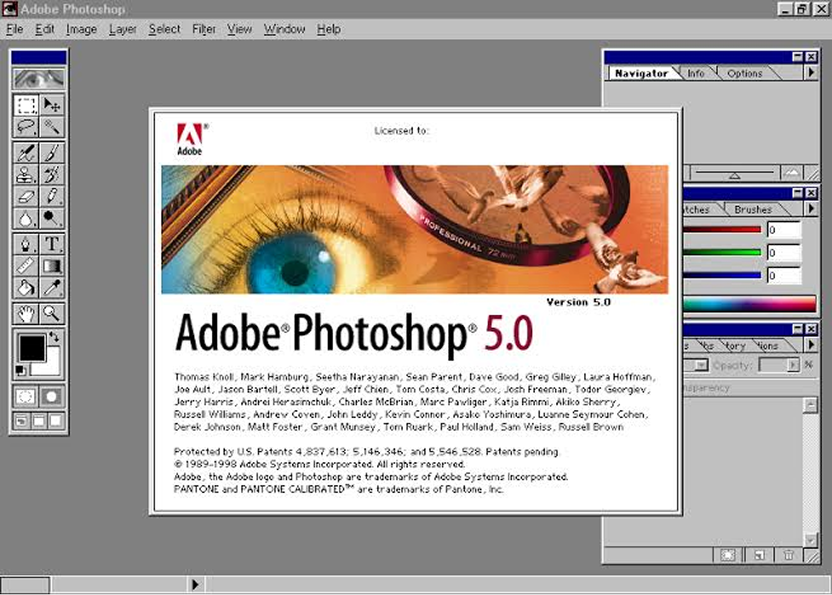
Ten years ago, I was a junior designer myself, and the question every one of us was asking the seniors was, "What's in your stack?" The honest answer in 2016 sounds almost quaint now: Adobe Creative Suite, Sketch if you were on the web side, InVision for prototypes, a Wacom tablet if you were drawing, and maybe Cinema 4D if you wanted to charge motion rates. That was the whole conversation, and I was as guilty of having it as anyone.
The creative process in 2016 was tool-heavy in a very physical sense. You opened a 4GB Photoshop file, you waited for it to load, you committed to a direction because rolling back through 200 history states was a real cost. Brand identity work meant building style guides as PDFs, exporting assets in seventeen sizes, and emailing them around in zip files. Motion graphics meant After Effects, manually keyframing every easing curve. Pitch decks were Keynote at best, PowerPoint at worst, and the bar for "good" was honestly very low — clients in the Nigerian market and globally were genuinely impressed by a well-set typography grid and a halftone overlay.
The competitive moat in 2016 was technical ability. If you could actually run an Adobe Creative Cloud setup, knew the keyboard shortcuts, and could push a project from brief to delivery without crashing the file, you had a job. Senior designers were people who had memorized the software. Creative directors were senior designers who had also learned to talk to clients without alienating them.
Looking back, this era flattered the wrong skill. We rewarded operators and called them creatives. The agencies that won were often the ones with the deepest software bench, not the ones with the sharpest point of view. There were exceptions — the studios that already understood that the work was about ideas, not tools — but they were rare, and they were usually the ones that survived what came next.
I spent the back half of the 2010s chasing exactly the wrong thing. Memorizing shortcuts. Grinding speed. Betting that if I could operate the software faster than the designer next to me, that was the path to creative authority. It wasn't. The designers from that era who became real creative directors were not the ones with the fastest hands — they were the ones who, even then, were quietly building taste while the rest of us were learning hotkeys.
2026: Creative Work as Taste Under Pressure
Fast forward to where we are right now, in 2026, and almost every assumption from 2016 is dead. The software stack has been compressed into something almost embarrassingly small. The serious creative agency in Lagos today — or in New York, or in São Paulo — runs on Figma for everything 2D, a handful of AI tools for ideation and asset generation, Runway or its equivalent for motion, and a slim layer of code (React, Tailwind, Cloudflare Pages) for delivery. The 2016 stack of fifteen specialized apps has collapsed into maybe four real surfaces.
And here is the part that surprises people who have not been paying attention: the work has not gotten easier. It has gotten harder. The standard has gone up. Clients in Lagos now expect deliverables in a week that would have taken a month in 2016. The "average" brand identity in the market is sharper than the "great" identity was ten years ago, because every junior designer with a Midjourney subscription can produce something that looks technically competent. Competent is the new floor, and competent is no longer interesting.
What separates studios in 2026 is not who can use the tools. Everyone can use the tools. The bar has shifted to three things.
Whether you can tell what is good. AI will generate fifty logo directions in three minutes. Picking the right one — the one that actually solves the brand problem and will still feel right in five years — is a taste skill, not a software skill. It cannot be prompted into existence.
Whether you have a point of view. If your creative direction is just "what the AI suggested," the client could have done that themselves. The job of a creative director is to have an opinion the client could not have arrived at alone.
Whether you can hold a system together. A brand in 2026 is not a logo and a color palette — it is a system that has to survive Instagram, TikTok, OOH, packaging, a web app, a motion identity, and probably a chatbot. Holding that system coherent across all those surfaces is creative direction work, not software work.
At 1204Studios, almost every project we run now has the same internal structure: a fast generation phase where we use AI and software to flood the field with options, and a slow taste phase where we kill 95% of them. The taste phase is the entire job. The generation phase is a commodity. Anyone with a credit card can do it.

This is the part I want every junior creative reading this to internalize: the software is not the moat anymore. The moat is your eye. The moat is whether you have seen enough good work to recognize good work when an AI hands it to you in a grid of twelve mediocre options. The moat is whether you can defend a decision in a room with a client who is paying you ₦15 million to be the person in the room with taste.
2036: Creative Work as Pure Curation and Conviction
Let me make some predictions about the next ten years. I want to be specific, because vague futurism is useless.
By 2036, I expect the actual production of creative assets to be effectively free and instantaneous. A complete brand identity system — logo, type system, color palette, motion identity, packaging mockups, web design, social templates — will be generated end-to-end by a single AI agent in minutes, at quality that exceeds what most agencies were shipping in 2026. The question of "can you make this?" will be a non-question. Everyone can make everything. The supply of creative output will be infinite.
This will completely reshape what a creative agency is. The agencies that survive will not be the ones with the best software stack — there will be no meaningful software stack, just AI agents that you point at problems. The agencies that survive will be the ones whose creative directors have a recognizable, defensible, marketable point of view. The work will be sold on taste, on judgment, and on the courage to say no to ninety-nine options before saying yes to one.
I think we will see a few specific shifts.
Creative direction becomes a more senior, smaller-headcount profession. You will not need teams of forty designers anymore. You will need three or four creative directors with strong taste and the ability to direct AI systems. The middle of the agency — the production layer — will largely disappear. This is already happening at small studios in Lagos and elsewhere; by 2036 it will be the norm.
Taste becomes hireable in a way it has never been. Right now, "good taste" is something we assess intuitively in interviews and hope we got right. By 2036, taste will be the primary hireable skill in a creative agency, and we will get much better at evaluating it — through portfolio reviews that focus on what someone killed, not just what they shipped, and through structured critique sessions that test judgment under uncertainty.
Brand strategy and creative direction will merge. The artificial split between "the strategist who decides what" and "the designer who decides how" is already eroding. By 2036, the senior creative person on a project will be expected to do both — to set the strategic direction and to make the aesthetic call, because the AI will handle everything in between.
Local taste will become a global differentiator. This one matters to me as a Lagos-based creative director. As AI flattens the global creative output toward a generic, slightly American, slightly Scandinavian default, the studios with genuinely local taste will stand out. A Lagos creative agency that understands the visual language of Nigerian markets, music, fashion, and street culture — and can direct AI tools to produce work that feels of-this-place — will have an enormous edge over a generic global studio. Place-specific taste is going to be one of the last real moats.
The creative director becomes a teacher of AI as much as a maker of work. Most of the leverage in a 2036 agency will come from how well you have trained your AI agents to share your taste. That is a long, careful, opinionated process. It is closer to mentoring a junior designer than to using software.
Why Taste Beats Stack: The Argument in Full
I want to be very direct about the thesis of this post, because I see junior creatives, design students, and even some senior designers in the Lagos creative scene still investing in the wrong skill. They are still asking "what's in your stack?" when they should be asking "how do I develop my taste?"
1. Software skill compounds for about two years. Taste compounds for a lifetime. The tools you learn this year will be substantially replaced within two years. The taste you build — the thousands of hours of looking at type, at color, at composition, at brand systems that work and brand systems that fail — never depreciates. Every hour you spend developing taste pays out for decades.
2. Software skill is purchasable. Taste is not. Any client can hire someone who knows Figma. There are millions of them. There is a much smaller pool of people who can tell you, in a way you actually trust, why one of three logo directions is the right one for your business. That smaller pool is what gets paid.
3. AI has destroyed the value of execution. It has not touched the value of judgment. This is the single biggest shift of the 2020s, and I do not think the industry has fully metabolized it yet. When execution was hard, execution was valuable. Now execution is trivial. The only thing left that is hard — and therefore the only thing left that is valuable — is the judgment of what to execute and what to throw away.
4. Clients buy conviction, not capability. A client paying real money for creative direction is not paying for the ability to make a thing. They could buy that ability anywhere now. They are paying for someone to walk into a room and say, "This is the right direction. Here is why. I am willing to defend this." That is a taste act, not a software act.
5. The agency model itself is shifting toward taste. The agencies winning the most interesting work in Lagos, in Africa, and globally right now are not the ones with the biggest tool licenses. They are the ones whose creative direction is identifiable from across a room. You can tell their work. That recognizability is taste, expressed consistently, over time.
How to Build Taste (If You Are Early in Your Career)
I will close with practical advice, because abstract arguments are not very useful to a junior designer reading this in 2026 trying to figure out what to invest in. I was that junior designer in 2016, and I made most of the wrong bets first — so consider this the note I wish someone had handed me a decade ago.
Spend less time learning new tools. Spend more time looking at work. Specifically: look at work that is older than you. Look at Polish poster design from the 1960s. Look at the Pentagram archive. Look at the Designer's Republic. Look at the type specimens of Optimo and Klim. Look at Nigerian highlife album covers from the 1970s. Look at agency websites you admire and ask yourself, sentence by sentence, why each design choice was made.
Develop a portfolio of opinions, not just artifacts. When you review your own work, can you articulate why each decision was made? If you can only say "it looked good," you have not built taste yet, you have built reflexes. Taste is reflexes you can explain.
Find people whose taste you respect, and let them critique your work hard. The single biggest accelerator of taste, in my experience, is sustained exposure to a sharper eye than your own. I have been lucky to have those people in my career. Find yours.
And finally: be opinionated in public. Write about the work you love and the work you hate. Put your taste on the record. The act of defending an opinion is what crystallizes it. The creative directors I respect in the Lagos scene and globally are almost all visibly opinionated in public.
The next ten years of creative work are going to be brutal for anyone whose value proposition is "I can operate the software." They are going to be extraordinarily generous to anyone whose value proposition is "I can tell you what is good, and I am usually right." Pick the second one. Build the second one. The stack will keep changing. Your taste, if you invest in it now, will keep paying you back for the rest of your career.